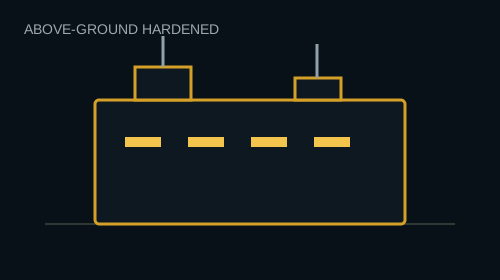
Above-ground hardened
Purpose-built surface infrastructure for protected compute, mission support, controlled access, evidence continuity, and resilient operation.
QIPS is a hardened infrastructure architecture for critical compute, evidence continuity, protected operations, and resilient deployment across above-ground, subsurface, and modular pod forms. This public site intentionally omits implementation-level engineering.
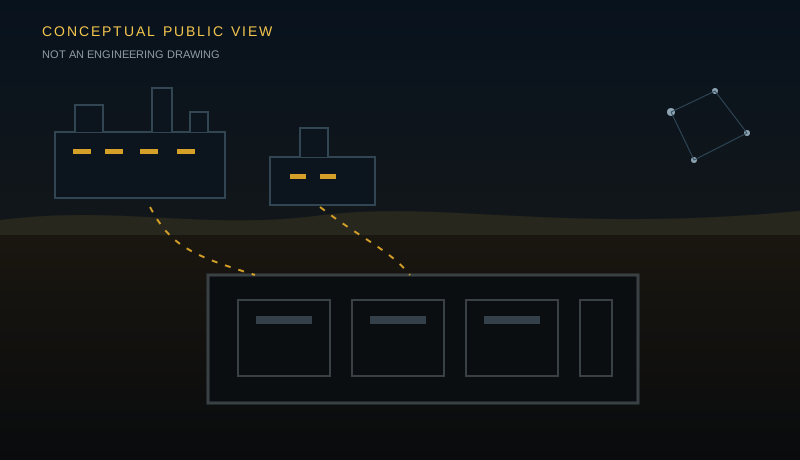
The public model shows the three principal physical expressions without disclosing structural, environmental, electrical, communications, or security engineering.
Purpose-built surface infrastructure for protected compute, mission support, controlled access, evidence continuity, and resilient operation.
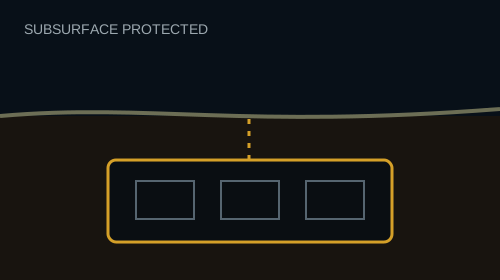
Below-grade or subsurface embodiments intended to add physical isolation, environmental protection, and operational survivability.
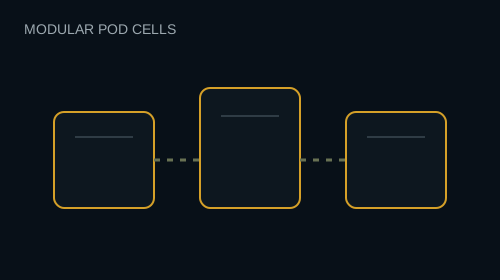
Repeatable protected modules that can extend capacity or create distributed protected infrastructure while preserving common governance boundaries.
Establish the relevant identity, asset, system, or authorized operator context.
Determine whether the requested infrastructure action is permitted.
Allow the native system to perform the bounded operational action.
Preserve supported evidence around what actually occurred.
Compare the outcome against the authorized effect and maintained state.
Make the reconciled outcome available to inform what may happen next.

QIPS provides the protected physical infrastructure boundary. JUPA provides the evidence-governance layer around consequential access, operation, observation, and reconciliation. QIPS does not replace the mission or native operational system.
The public site is intentionally limited to architecture classes, mission purpose, and governance principles. Technical integration packages, engineering drawings, partner materials, filing-sensitive disclosures, and proposal-specific content remain outside the public publication boundary.
No government affiliation, contract award, certification, compliance status, or operational deployment is implied by the visual theme or public descriptions.
Sign in to access the controlled QIPS presentation environment.
Use of this controlled environment may create governed evidence events.